| |
|
|
A
MESSAGE FROM THE
FOUNDER AND CEO, JONATHAN MARKS
|
|
|
Welcome to The Clinical Group and our first
inaugural New Jersey Healthcare Real Estate Market Report! We are a
medical real estate and healthcare advisory platform dedicated to
empowering physicians, medical practices, hospitals and investors with
integrated, strategic real estate and advisory solutions. Our specialized
model through our subsidiaries of Clinical Advisory, Clinical Real
Estate, Clinical Development, Clinical Investment and Clinical Studios
brings together fully integrated solution as your trusted partner for
Medical Real Estate and Clinical Growth.
Founded on a deep understanding of the Healthcare
and medical real estate landscape, our team of experienced professionals
combines data driven insights with medical market expertise to deliver
solutions including: physician practice advisory for growth and enhanced
operations, portfolio strategy for optimized real estate, tenant
representation for seamless medical office lease or sales acquisitions,
Healthcare brokerage to enhance property results and maximize asset
values for landlords, new development for building custom medical
facilities and physician alignment through our Physicians Fund allowing
doctors the ability to participate in real estate returns as part of
their practice. We foster long term partnerships to streamline the real
estate process, enhance value, mitigate risks and maximize results for
all stakeholders in today’s dynamic healthcare and real estate
environment.
This Quarterly New Jersey Medical Office Report
reflects Clinical Real Estate’s industry’s leading team. Each edition is
designed to provide timely market intelligence, meaningful trends, unique
opportunities in the market and practical insights to help our clients
and partners navigate an evolving healthcare real estate landscape for
enhanced value.
|
|
|
|
|
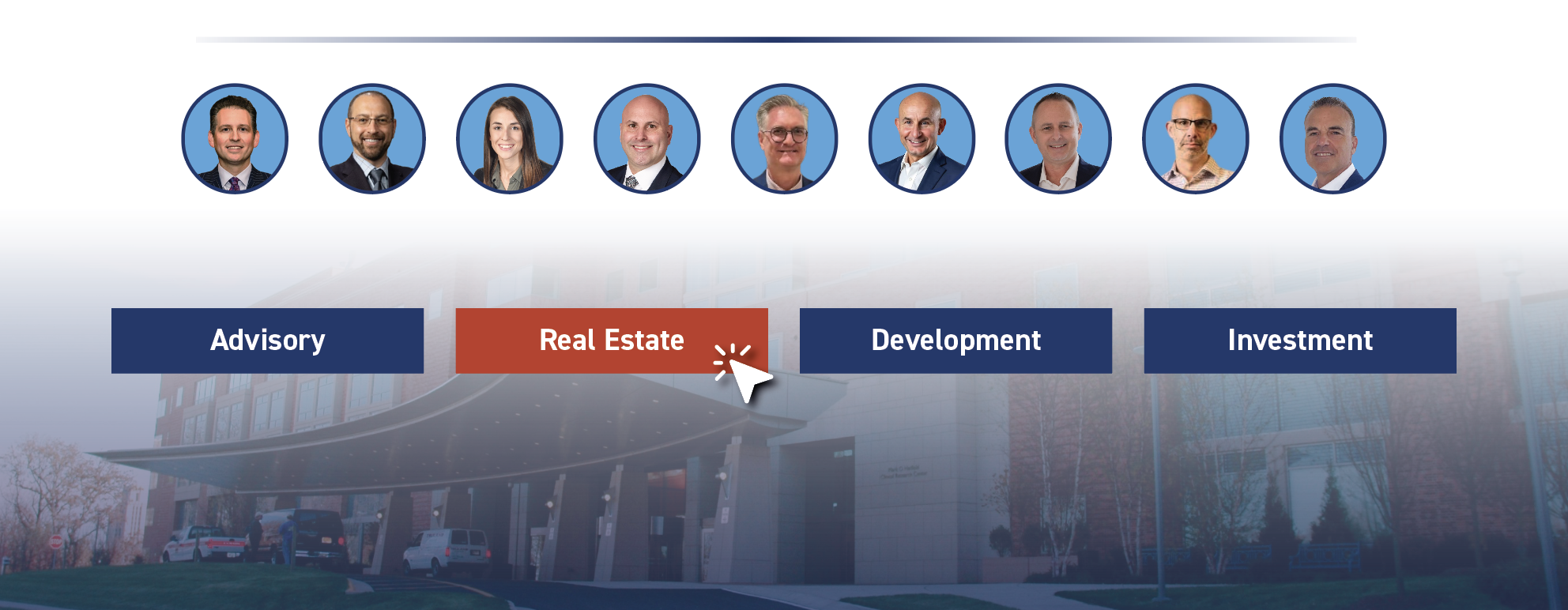
A Collection of Healthcare Experts |
|
|
|
Q4 2025 NORTHERN NJ MEDICAL STATS
|
|
|
BERGEN COUNTY
494 Medical Buildings
6,926,121 SF RBA
$27.53 PSF Base Rent
|
HUDSON COUNTY
205 Medical Buildings
4,262,997 SF RBA
$27.83 PSF Base Rent
|
|
ESSEX COUNTY
306 Medical Buildings
4,708,514 SF RBA
$26.97 PSF Base Rent
|
MIDDLESEX COUNTY
504 Medical Buildings
6,537,992 SF RBA
$24.95 PSF Base Rent
|
|
|
|
Q4 2025 TOP SALES & LEASES |
|
SALES
3,500 SF | $4,225,000 625 Somerset St., Somerset, NJ Buyer: 619 Somerset Street Partners LLC Seller: Paramount Realty Services
11,674 SF | $2,185,000 200 South St., New Providence, NJ Buyer: William Hanley Seller: Signature Realty NJ, LLC
|
|
LEASES
7,075 SF 107 Monmouth Rd., West Long Branch, NJ
6,766 SF 3120 Princeton Pike, Lawrenceville, NJ
6,222 SF 122 Route 22 E., Bridgewater, NJ
5,000 SF 430-432 Broadway, Bayonne, NJ |
|
|
|
Q4 2025 STATE OF THE HEALTHCARE MARKET
|
|
|
The
healthcare space, particularly medical office buildings (MOBs) and outpatient
facilities, finished 2025 strong, continuing the sector’s trend of resiliency.
While the broader CRE market — especially the traditional office sector —
continued to face headwinds, healthcare real estate (HRE) remained stable and
grew, a trend experts predict will continue into 2026.
POLICY
SHIFTS AND FINANCIAL REALITIES
The
“One Big Beautiful Bill Act” (OBBBA) has introduced the most significant
legislative changes to healthcare since the ACA. These changes continue to
pressure hospital finances.
- Medicare and Medicaid
cuts are projected to reduce provider margins by up to 18% over the next five years.
- Hospital downgrades are
outpacing upgrades by nearly 3 to 1.
- Higher premiums mean more
people are dropping their healthcare, which will increase the risk of
uncompensated care.
DEMOGRAPHIC
SHIFTS AND CLINICAL IMPACT
An
aging population is driving higher demand for services, especially in the
Southeast and Central U.S. While inpatient volume remains flat, the severity of
illness (acuity) and average length of stay are increasing. Providers are
shifting care to lower-cost outpatient settings to protect and optimize
operating margins.
ENVIRONMENTAL
RISKS AND CONSTRAINTS
Persistent
inflation, supply chain instability, and labor shortages continue to hinder
healthcare facility construction and operation. The OBBBA rolled back federal
clean energy incentives, making it harder for healthcare systems to justify the
ROI of sustainability and carbon-reduction investments. Skilled labor remains a
primary constraint, necessitating greater reliance on prefabrication and
modular construction to maintain project schedules.
SMARTER
TECH, SMARTER CARE
Digital
transformation has moved from an experimental to a core capital priority, as
systems seek efficiency through technology.
STRONG
AND STEADY PATIENT VISITS
The
12-month average for patient visits per provider (excluding flu) has grown
steadily since 2021, driven by expanded medical coverage, an aging demographic,
the restoration of routine care after pandemic-era pauses, and a stabilizing
economy. The volume of physician consultations grew at an average CAGR of 1%
between 2020 and 2025, with the pace slowing dramatically between 2024 and
2025 (visits increased 2.2% in 2024 and just 0.9% in 2025).
COLLABORATIVE
SURVIVAL
Small
and rural medical centers have begun adopting a strength-in-numbers strategy.
These facilities, long burdened by shrinking local populations, high reliance
on government-funded insurance, and chronic staffing shortages, are forming clinically integrated frameworks and
shared-service alliances. This model allows these providers to
consolidate administrative tasks and gain leverage in payer negotiations while
maintaining their status as independent, community-led institutions.
|
|
|
|
|
BY
THE NUMBERS
Over
28,700 medical office buildings (MOBs) with more than 2.2 billion square feet
of space currently exist in the U.S. Manhattan currently ranks as the fifth-largest MOB
market, with 90.5 million square feet of specialized space across
377 properties, accounting for about 4% of the nation’s total MOB stock.
Defining this market? Extreme density and institutions like NYU Langone,
Mount Sinai, and NewYork-Presbyterian, which continue to anchor the borough’s
high demand and rental rates.
Unlike
sprawling markets like Houston or Los Angeles, Manhattan faces geographic
constraints, high land costs, and rigid zoning laws. Thus, ground-up
development is rare; as of mid-2025, only 636,100 square feet across three
projects was under construction. To ameliorate the lack of available land,
owners and health systems are increasingly prioritizing the vertical
expansion and modernization of existing structures. One example? The $20 million renovation of the Park Sixty MOB,
which enhanced its infrastructure to meet modern clinical standards.
The
shift toward outpatient care remains a dominant trend. The Hospital for Special Surgery (HSS) is
nearing completion of its 400,000-square-foot tower on the Upper East Side,
which will serve as a surgical and outpatient hub starting in 2026. This
project reflects the broader Manhattan strategy: creating high-density,
high-acuity facilities bringing specialized services into urban
neighborhoods. Despite limited new supply, the borough’s institutional
strength cements its position as a global center for medical excellence and a
resilient target for CRE investment.
According
to one report, MOB transaction volume in H2
2025 was expected to pick up after a slow first half, with Q3 seeing an
increase to $2.7 billion (a 27% QoQ rise), signaling stronger investor
interest despite overall caution driven by: - Positive
demand
- Record
rents
- Economic
growth supporting healthcare services
While
specific H2 totals are still pending, the trend points to a significant
rebound from early 2025’s muted activity, with projections suggesting a
substantial volume increase by year-end, according to multiple reports.
Record
high rents ($25.20 per square foot in Q3) and positive
net absorption (2.4M square feet in tracked markets) indicated strong
underlying demand for MOB space. The adjusted cap rate expanded 30 bps over
Q2 2024, according to one report. By the end of Q3, 1,055 qualifying properties representing
54.14M square feet and valued at $16.27 billion changed hands. MOBs had the
largest share (807 trades, $8.5 billion, averaging $360 per square foot, with
an average transaction size of $10.5 million).
This
report found that:
Standard
MOBs traded at an average cap rate of 6.9%, while office properties with
medical suites commanded higher yields, averaging 7.9%. General hospitals
maintained their position as premium assets, commanding the lowest yields in
the industry.
Among
specialized facilities, rehabilitation hospitals emerged as the most active
sub-sector. Nineteen properties sold for a combined $580 million, averaging
$569 per square foot. The market for behavioral health centers and long-term
acute care (LTAC) facilities remained sluggish. Pricing averaged $218 per
square foot for behavioral health and $139 per square foot for LTAC
hospitals.
WHAT’S
NEXT?
The
MOB sector enters 2026 as a cornerstone of stability within the broader CRE
market. A demographic shift, especially the 3.1% annual growth of the U.S. population aged 65+,
has driven demand for outpatient services. This surge in patient needs has
pushed medical office occupancy to 93% — the highest level in a decade
— while tenant retention has stabilized at nearly 89%. The sector
remains largely insulated from the economic volatility affecting traditional
office and retail spaces.
Large-scale
portfolio movements and private equity partnerships will continue to reshape
investment activity. One example? The $7.2 billion sale of Welltower’s outpatient portfolio
to Remedy Medical Properties and Kayne Anderson Real Estate, suggesting a
robust appetite for established healthcare assets even as REITs pivot toward
senior housing. While high financing and construction costs have tempered the
development pipeline, interest in adaptive reuse remains high. Developers are
increasingly converting vacant retail shells and traditional office buildings
into modern clinical spaces to meet local demand without the steep costs of
ground-up construction.
The
industry will continue to watch federal policy shifts, including OBBBA’s
impact on Medicaid and reimbursement structures. These regulatory changes are
expected to influence location strategies, driving a migration toward
high-density markets in the Sun Belt. Despite these potential challenges, the
shift of higher-acuity procedures to ambulatory surgery centers and the
continued need-based nature of healthcare suggest that the MOB asset class
will maintain its reputation for durable cash flows and resilient
performance.
|
|
|
|
|
|
|
|
|
Darren M. Lizzack, MSRE Principal 201-906-4376 dlizzack@theclinicalgroup.com |
|
Randy Horning, MSRE, SIOR Principal 201-739-9311 rhorning@theclinicalgroup.com |
|
|
|
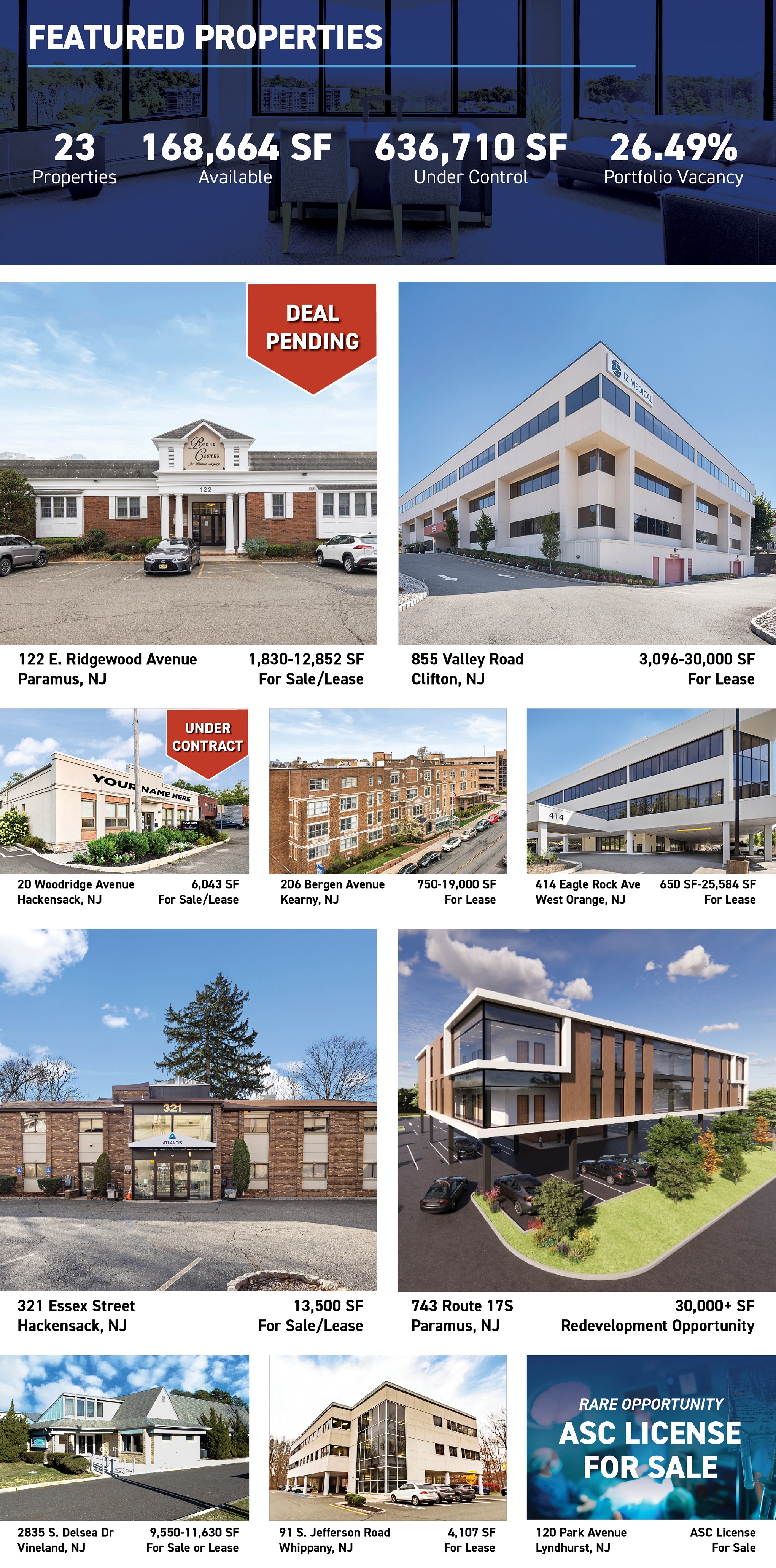
To view all our listings, visit teamlizzackhorning.com |
|
|
|
|
|
info@TheClinicalGroup.com | 855-CLINGRP | theclinicalgroup.com
The Clinical Group, 411 Hackensack Ave, 2nd Floor, Hackensack, NJ |
|
|
|
|
|
|